
The Engineering Problem
Timber poles deteriorate due to environmental exposure, biological activity and sustained mechanical loading. The most critical degradation frequently occurs below groundline, where moisture cycling and fungal activity accelerate fibre breakdown.
- Brown rot, white rot and soft rot fungal decay
- Groundline moisture cycling
- Insect damage
- Preservative treatment depletion
- Mechanical overload and fatigue
Traditional inspection techniques are limited in penetration depth and repeatability.
- Visual inspection detects only surface indicators
- Sounding and drilling provide localised information
- Core sampling is invasive and destructive
- Excavation is labour-intensive and disruptive
Subsurface degradation can remain undetected until residual structural capacity is significantly reduced.
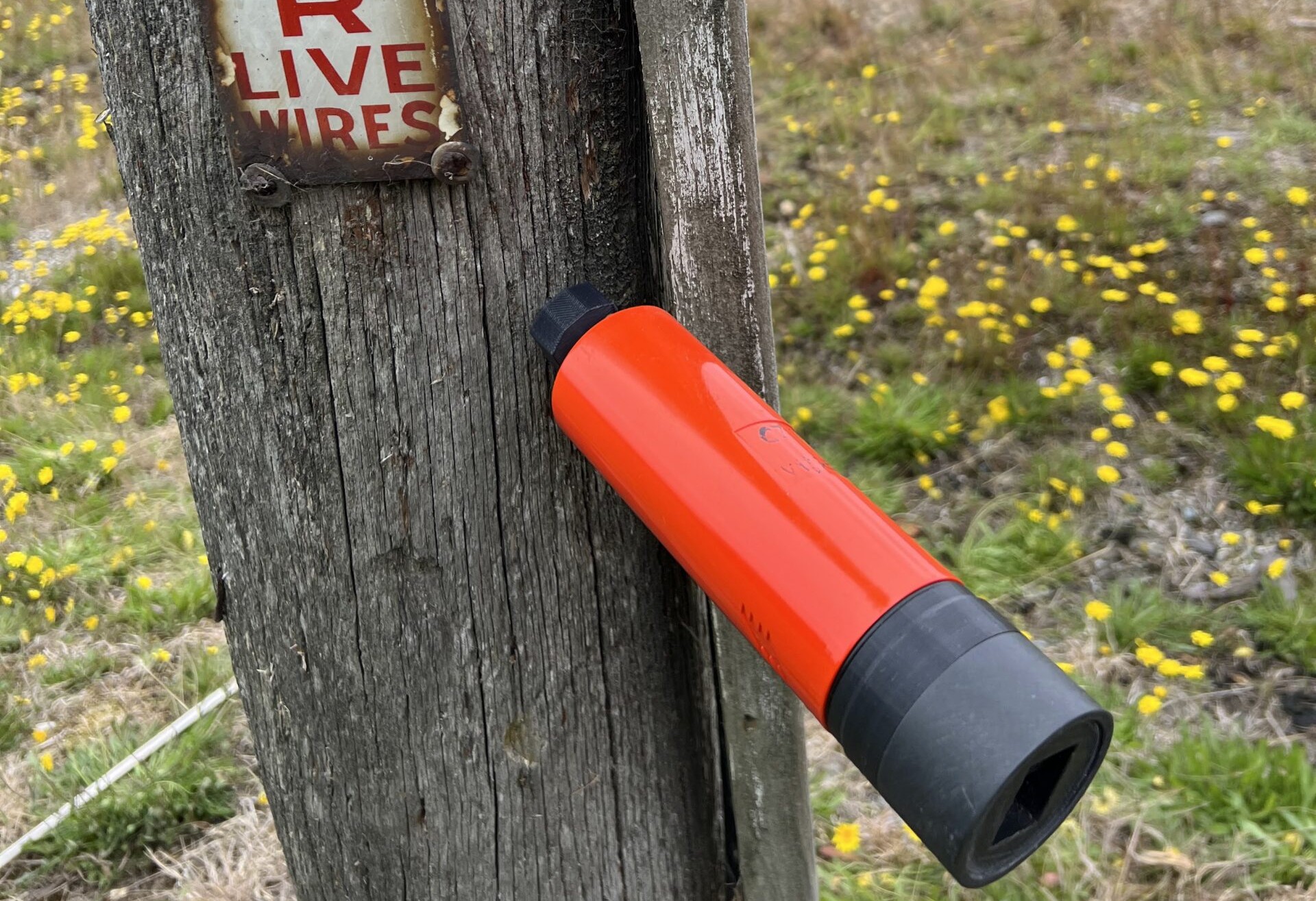
Ultrasonic Non-Destructive Evaluation (UB1000)
The UB1000 device measures the propagation of ultrasonic stress waves through timber. Variations in wave transmission characteristics correlate with changes in fibre integrity and structural performance.
Measured parameters include:
- Time of flight
- Signal energy attenuation
- Wave energy characteristics
These measurements are analysed to estimate remaining strength and structural capacity at the inspection location.
Ultrasonic non-destructive evaluation of timber poles enables:
- Detection of internal decay prior to visible symptoms
- Quantitative assessment of remaining strength
- Repeatable measurement over time
- Creation of digital inspection records
What Is Measured
At each inspection point, ultrasonic readings generate quantitative indicators of timber condition. Measurements are recorded relative to pole height, including groundline and below-ground positions where applicable.
- Wave transmission response
- Derived strength indicators
- Estimated residual bending capacity
- Condition mapping by height
All data is digitally recorded and linked to pole identification, geographic location and asset metadata.
Early-Stage Decay Detection
Ultrasound is sensitive to early fibre degradation, including incipient rot conditions that are not externally visible. Detection of internal changes prior to advanced cavity formation enables earlier intervention.
Ongoing research programmes are evaluating ultrasonic response characteristics associated with early-stage fungal degradation mechanisms, including advanced internal breakdown processes. Research findings will be published in the Insights section as validation work progresses.
Applications
- Groundline condition assessment
- Targeted pole replacement planning
- Storm hardening programmes
- Residual strength validation
- Preservative treatment performance assessment
- Life extension modelling
Inspection data supports risk-based maintenance strategies rather than age-based replacement cycles.
Integration With Network Strategy
Ultrasonic inspection outputs integrate with utility asset management systems and compliance reporting frameworks.
- Asset condition databases
- Replacement prioritisation models
- Regulatory reporting
- Long-term capital planning
- Network risk modelling
Each inspection generates an auditable digital record aligned with structured engineering decision processes.
Technical Domains
Ultrasonic pole assessment intersects with multiple engineering and scientific disciplines:
- Timber mechanics
- Structural engineering
- Fungal degradation science
- Risk modelling
- Utility asset management standards
For detailed engineering context, see the Technical Domains section.
For research updates and validation studies, see Insights.
Related Solution
For structural compliance assessment of overhead conductors and load modelling, see the Overhead Line Analysis solution.