
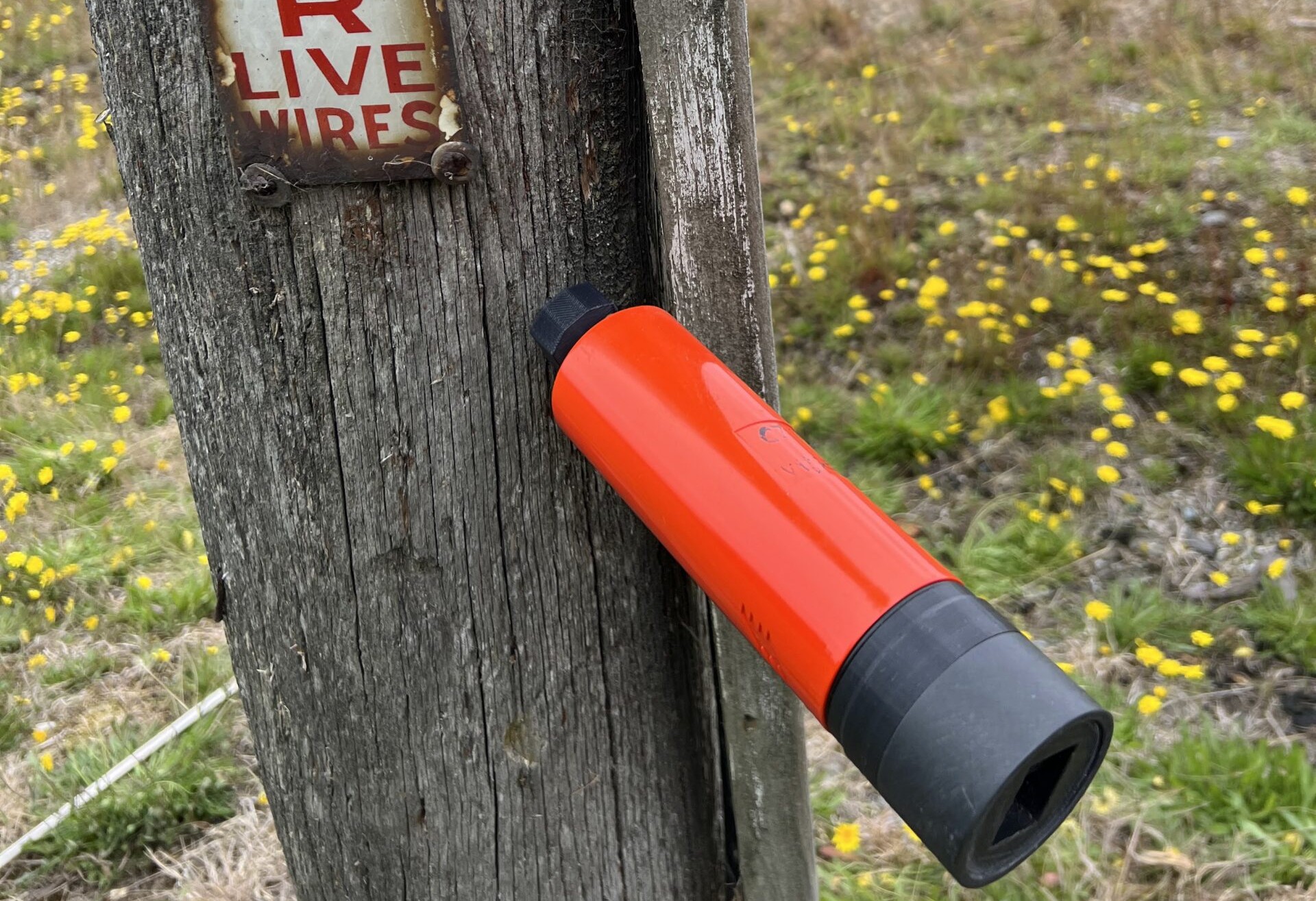
Detect internal decay and quantify structural condition without drilling or excavation
UB1000 ultrasonic acoustic non-destructive evaluation (NDE) enables utilities to identify early-stage and incipient decay, supporting earlier intervention and more reliable asset management decisions.
Why traditional pole inspection falls short
Wooden utility poles are inherently variable and degrade over time due to environmental exposure, biological decay, and mechanical loading.
Traditional inspection methods such as sound, bore and excavate (SBE):
- Reliably detect advanced decay
- Cannot detect incipient decay
- Are intrusive and damage wood fibres
- Introduce pathways for moisture and oxygen ingress
- Rely on operator judgement rather than measurable data
These limitations can delay intervention and reduce overall asset life.
A non-destructive, data-driven alternative
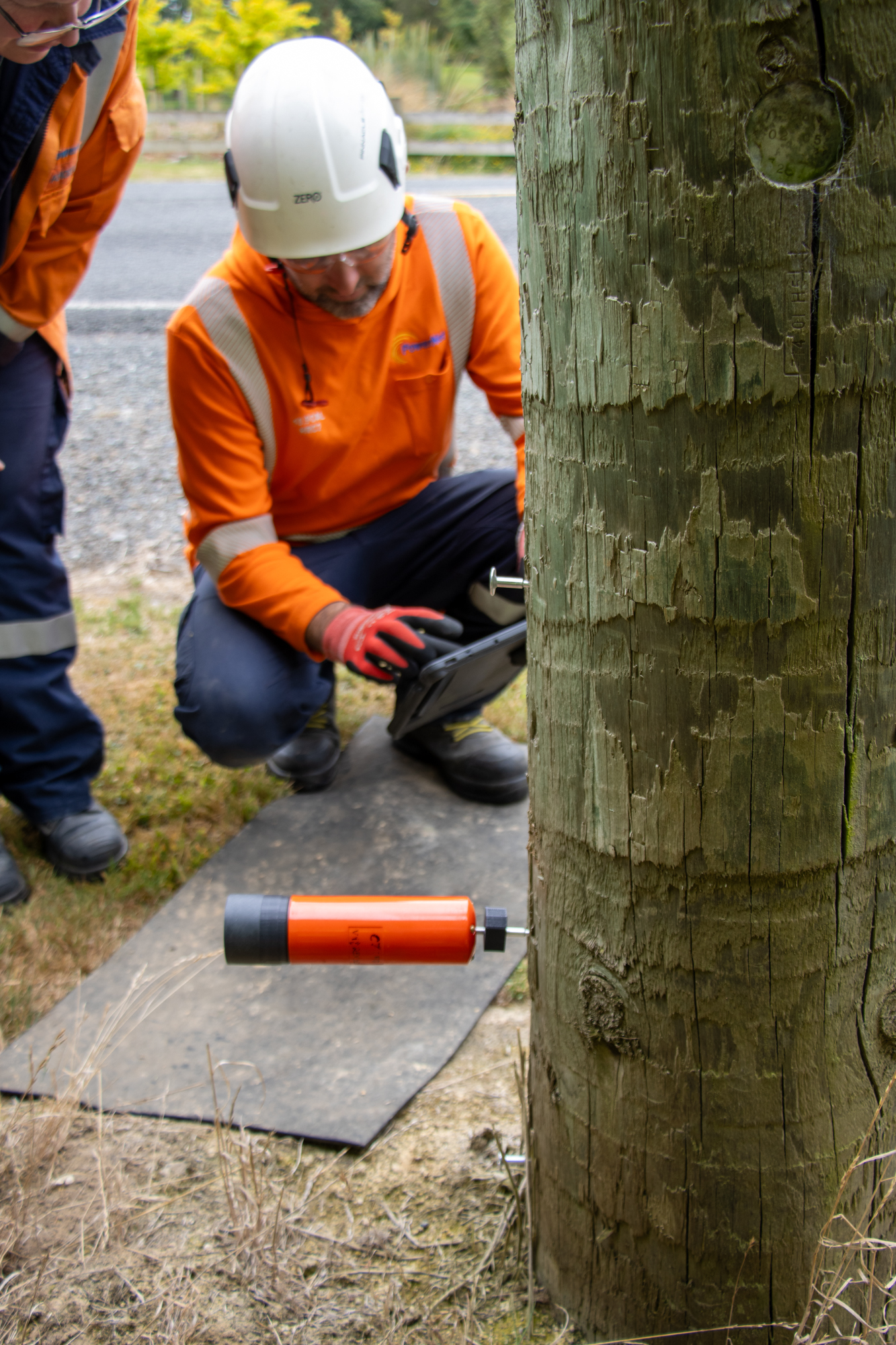
UB1000 uses ultrasonic acoustic testing to assess the internal condition of timber poles without damaging the structure.
- Detects early-stage and incipient decay
- Evaluates the full cross-section of the pole at each test location
- Avoids fibre damage and preservative breach
- Provides consistent, repeatable measurements
- Stores inspection data for traceability and audit
Unlike drilling-based methods, acoustic testing reduces subjectivity and enables a data-driven inspection approach.
Detecting incipient decay earlier
Research shows that 10–20% strength loss can occur during the incipient decay stage, before visible symptoms are present.
Traditional inspection methods group incipient decay with “sound” wood, missing the opportunity for early treatment.
UB1000 enables:
- Detection of incipient decay
- Earlier treatment (typically 5–7 years earlier)
- Slowing of decay progression
- Extension of safe service life
How UB1000 ultrasonic NDE works
Each test transmits an acoustic wave across the diameter of the pole and analyses its response.
- Measurements include signal behaviour such as energy and transmission characteristics
- Testing is performed in cross-sectional planes from groundline upward
- The progression and extent of decay can be mapped along the pole
This approach evaluates the internal condition of the pole rather than relying on surface indicators or linear drill paths.
Outputs for asset managers
UB1000 provides actionable data for inspection and maintenance planning:
- Identification of decay stage (incipient, early, advanced)
- Definition of decay extent along the pole
- Quantitative condition indicators linked to structural performance
- Digital records supporting audit and compliance
- Data ideally suited for integration into asset management and GIS systems
Supporting life extension and remediation
Accurate identification of decay enables more effective treatment and reinforcement strategies.
- Treatment can begin earlier in the decay cycle
- Reinforcement can be designed to extend beyond the full decay profile
- Structural interventions can be optimised based on actual condition
This supports improved safety, reliability, and cost-effective life extension of wooden pole assets.
Part of a broader inspection workflow
UB1000 integrates with complementary measurement and analysis tools:
- Axonic – Measurement of pole geometry, height, and structural parameters
- Insights – Technical articles on inspection, decay, and asset management
Combined, these tools support both condition assessment and structural evaluation of overhead line assets.
Pole testing using UB1000
Request information
Contact us to request further information or discuss how UB1000 ultrasonic NDE and Axonic can support your asset inspection program.